
NESA Therapy in Grantham, Lincolnshire, East Midlands
The Science Behind NESA Therapy
Peer-reviewed clinical evidence for autonomic nervous system neuromodulation
Table of Contents
Evidence-Based, Not Trend-Based
NESA therapy isn't a wellness trend or unproven alternative treatment. It's a clinically validated technology with a growing body of peer-reviewed research published in international medical journals including Frontiers in Pain Research, Brain Sciences, Geriatrics, and the International Journal of Environmental Research and Public Health.
The studies below represent the strongest available published evidence for the areas most relevant to the people I work with: insomnia, stress, anxiety, depression, chronic fatigue, chronic pain, and general health and wellbeing. Where available, links point directly to the original peer-reviewed paper. For some findings, links point to NESA's own published Evidence Dossiers, which compiles and cites all the underlying research.
How NESA Therapy Works
NESA XSIGNAL delivers gentle, unnoticeable microcurrents through special gloves and anklets - which have 24 built-in electrodes - plus one targeted electrode that is placed on a specific part of the body.
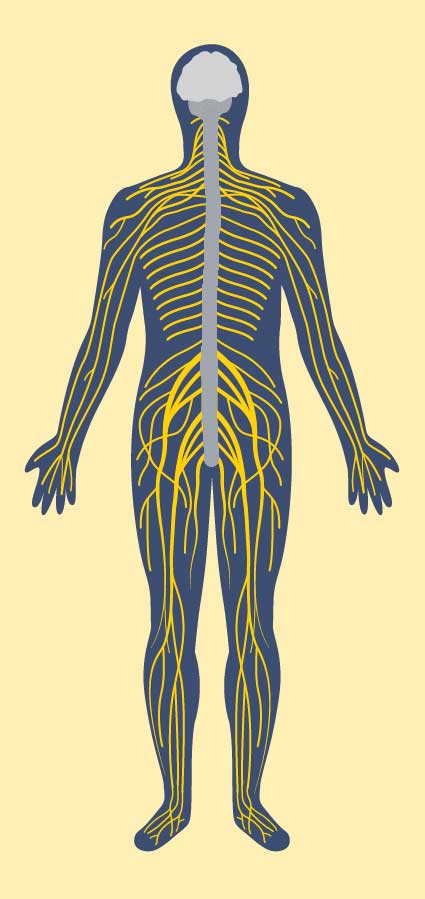
These microcurrents travel through the nerve pathways to balance the nervous system in three ways to gently rebalance your brain, body and nervous system:
- Centrally: the central nervous system - brain and spinal cord.
- Peripherally: the peripheral nervous system - the nerves that run throughout the body.
- Metamerically: the targeted electrode focuses on specific spinal nerve pathways that connect to the problem area.
The result is improved heart rate variability, enhanced vagal tone, better sleep quality, reduced pain sensitivity, and a gradual restoration of the body's natural self-regulatory capacity.
Key Findings at a Glance
The following figures are drawn directly from peer-reviewed clinical studies. The findings are briefly described below, and the links to the full articles are provided.
%
better sleep quality
%
more time asleep (page 20)
%
less night-time awakenings
%
less daytime sleepiness
%
reduction in anxiety (page 16)
%
less perceived pain (page 34)
Poor Sleep
Poor sleep is rarely just a night-time issue; it's a symptom of an overactive nervous system that refuses to shut down. NESA therapy uses low-frequency microcurrents to guide the body out of a state of constant alertness, helping to reset the natural sleep-wake cycle.
Clinical trials show that over a standard course of treatment, patients experience up to a 49% increase in overall sleep quality and a 30% boost in total time asleep. The gentle stabilisation of the nervous system also helps patients to fall asleep faster, with 64% less night-time awakenings and 58% less daytime sleepiness.
Anxiety
When a person experiences chronic stress or anxiety, their sympathetic nervous system is stuck on high alert. This causes physical symptoms like a racing heart, muscle tension, and shallow breathing. NESA acts like a gentle brake for this system.
By delivering imperceptible electrical impulses through the hands and feet, NESA therapy boosts parasympathetic activity - the body's natural mechanism for relaxation. Clinical metrics tracking standardised anxiety scales show up to 50% reduction in anxiety symptoms, offering a calming effect that balances both mental worry and physical tension without the use of medication.
Chronic Pain
Chronic discomfort often persists because the central nervous system becomes overly sensitive, amplifying minor physical sensations into constant pain signals. Instead of simply masking pain at the site of the injury, NESA therapy works globally to soothe these overstimulated pain pathways.
Over a course of 10 to 20 targeted sessions, clinical trials demonstrate an average of 60% reduction in perceived pain across standardised pain scales. This approach helps lower the nervous system's background noise, making chronic conditions significantly more manageable.
Depression
In a 2025 study, NESA therapy showed a positive clinical trend in reducing depressive symptoms among older adults, as measured by the Yesavage Geriatric Depression Scale. While the NESA group improved, the control group showed no change or even slight worsening.
The study also found statistically significant improvements in several key areas of the WHO Quality of Life questionnaire, including physical health, psychological wellbeing, and social relationships. These gains came alongside strong sleep improvements, including 17% better sleep quality scores and 64% fewer night-time awakenings.
Chronic Fatigue
Chronic fatigue isn't ordinary tiredness. It's an exhaustion that sleep doesn't fix and that accumulates regardless of how much you rest. Whether you're dealing with burnout, post-viral fatigue, ME/CFS, or long-term depletion, the autonomic nervous system is almost always central to what's happening. When the ANS can't shift into genuine recovery mode, the body stays depleted no matter how much rest you take. A 2025 pilot study published in Brain Sciences (MDPI) investigated NESA therapy in women with post-COVID fatigue, finding clinically meaningful improvements in fatigue scores over a 15-session course, with a large effect size suggesting the changes went beyond chance. A separate 2025 study also reported meaningful reductions in fatigue following NESA treatment.
Stress & General Wellbeing
Chronic stress has a direct and measurable impact on the autonomic nervous system. When the nervous system is dysregulated, heart rate variability (HRV) drops - a sign that the nervous system has lost its ability to respond flexibly and recover effectively. Higher HRV is one of the most reliable objective markers of stress resilience and overall autonomic health.
A 2025 randomised pilot study found that HRV increased by 29% in the NESA group, while it decreased by 10% in the placebo group over the same period.
A separate 2022 randomised controlled trial conducted with FC Barcelona found that NESA participants had significantly lower resting heart rates and night-time heart rates compared to the placebo group - both recognised physiological markers of reduced stress load and improved recovery.
A Note on Evidence
Further evidence for the effectiveness of NESA Therapy can be found in the NESA Evidence Dossiers, which can be downloaded by clicking the buttons below.
As with any emerging technology, the evidence base for NESA therapy is growing rather than exhaustive. Most of the published studies to date are preliminary or observational in nature, with relatively small sample sizes. Larger randomised controlled trials are underway, and the results of those will add further weight to what the existing research already shows.
What is consistent across all published studies is a clear signal of benefit across multiple conditions, a strong safety profile with no adverse effects recorded, and objective physiological data that supports the clinical improvements patients report. This combination of patient-reported outcomes and objective physiological measurement is a hallmark of credible clinical evidence.
Ready to Experience the Benefits
If you'd like to find out whether NESA therapy or Neuro-Somatic Therapy could help you specifically, the best place to start is a free, no-obligation consultation. We'll talk through what you're experiencing and whether the research suggests NESA therapy is likely to help in your case.